- Parc de l'Alliance, Avenue du Japon 1 1420 Braine l'Alleud
- 02 386 03 00
- leads@webforce.be

Discover the secrets to winning big at online casinos
Maximize your experience at the best online pokies Australia: A guide to swift withdrawals
septembre 1, 2026Παίξτε Ports Online η πραγματική προσφορά Money Us: Τα 10 κορυφαία καζίνο για το 2026
septembre 1, 2026
The concept of luck in gaming
Luck has long been a fundamental aspect of gambling, often viewed as a force beyond human control. In casinos, the notion of luck is intricately tied to the randomness of the games, where outcomes are uncertain and unpredictable. Many players exploring their options may find that online pokies australia payid can offer a new experience, believing that it can significantly influence their chances of winning. However, luck is a subjective experience; what one player perceives as a stroke of luck might be viewed as mere coincidence by another, showcasing the variability in human perception.
The psychology behind luck significantly impacts gaming behavior. Players often develop personal beliefs about luck, which can influence their decision-making processes. For instance, someone might feel inclined to play a specific slot machine because they believe it has been « lucky » for them in the past, despite the fact that each game is statistically independent of previous outcomes. This cognitive bias can lead to a phenomenon known as the « gambler’s fallacy, » where individuals incorrectly assume that past results can predict future events, leading to misguided betting patterns and expectations.
Furthermore, the role of luck isn’t confined solely to game outcomes; it extends to the very atmosphere of the casino. The layout, sounds, and lights are meticulously designed to create an environment that enhances feelings of excitement and anticipation, amplifying the perception of luck. These elements can profoundly affect players’ emotions and perceptions, further blurring the lines between random chance and the concept of being « lucky. » Ultimately, while luck is a central theme in casino gaming, it is deeply intertwined with human psychology and the overall design of the gambling experience.
The science behind randomness
Randomness is a mathematical concept that serves as the foundation for many games played in casinos, providing a framework for understanding outcomes. In statistical terms, randomness refers to the lack of discernible patterns or predictability in events. For example, when a roulette wheel is spun, the resulting number is determined by a complex interplay of physical factors, making it impossible to predict with certainty. This inherent randomness is what makes games of chance exciting, as players are often drawn to the thrill of unpredictability and the potential for unforeseen outcomes.
Mathematicians and statisticians have developed numerous tools to analyze random events, establishing that while outcomes may appear random, they can often be modeled statistically. In the context of gambling, the concept of probability becomes essential. Each game in the casino—whether it’s blackjack, poker, or a slot machine—has a defined probability of winning, meticulously calculated to ensure that the house maintains an advantage over time. Understanding these probabilities is crucial for players, as they provide valuable insights into the fairness and potential payouts of different games.
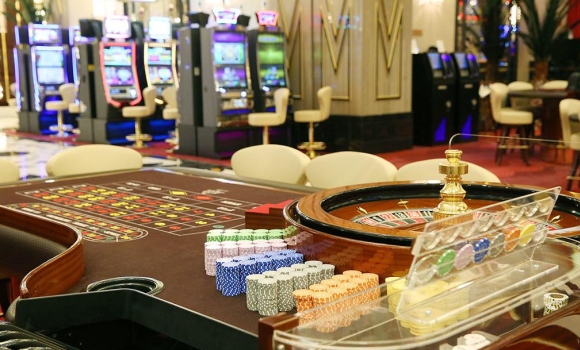
Moreover, the study of randomness extends beyond the casino floor and into various fields, including cryptography, computer science, and even meteorology. In the realm of casinos, advanced algorithms are employed to generate random numbers, ensuring fairness in games. This meticulous approach to randomness demonstrates that while luck may seem elusive, it is grounded in mathematical principles that can be measured and analyzed. By grasping these principles, players can demystify the notion of luck and gain a clearer understanding of their potential outcomes in a game.
The role of technology in randomness
The advancement of technology has revolutionized the way randomness is generated and perceived in casinos. Traditional games such as roulette and blackjack are undergoing significant transformations with the emergence of online gaming platforms. Random Number Generators (RNGs) are now a staple in digital games, ensuring that each result is independent and fair. This technology instills a level of confidence in online players that many land-based establishments may struggle to offer, given the inherent randomness of physical games.
RNGs operate using complex algorithms that generate sequences of numbers devoid of any recognizable pattern. These numbers correspond to game outcomes, making it imperative that the algorithms undergo rigorous testing to verify their fairness. Regulatory bodies often oversee this testing to uphold integrity within the gaming industry. Players can trust that the randomness embedded in these systems is as robust as that found in traditional gaming environments, reinforcing the principle that luck is a fundamental element of the gaming experience.
Furthermore, technology continues to evolve, incorporating elements such as artificial intelligence and machine learning to analyze player behavior and enhance the overall gaming experience. Casinos can now sift through vast amounts of data to understand how players interact with various games, allowing them to tailor experiences to suit player preferences while maintaining core randomness. This fusion of technology and chance creates an environment that feels both innovative and steeped in the timeless appeal of luck and unpredictability.
The myths surrounding luck and skill
The interplay between luck and skill often sparks lively debates among seasoned players and newcomers alike. Certain games, such as poker, incorporate a significant skill component alongside luck, as players can influence outcomes through strategic decision-making and psychological tactics. In contrast, games like slot machines rely solely on chance, leading players to depend entirely on luck. This distinction can foster misconceptions about what it takes to succeed in various casino games, prompting players to misjudge their abilities and strategies.

Many players tend to overestimate the influence of skill in purely chance-based games, leading to a belief that they can « beat the odds » through practice, study, or strategies. This mindset can result in frustration when outcomes do not align with their expectations, reinforcing the notion that luck plays a more crucial role than skill in these scenarios. Understanding the balance between luck and skill can empower players to make more informed decisions and better manage their expectations when engaging with different casino games.
Moreover, the myths surrounding luck can perpetuate a cycle of superstition among players. Many individuals believe in various rituals that they think enhance their chances, such as wearing a specific lucky charm or following particular playing patterns. While these behaviors can be harmless and may enhance the overall gaming experience, they do not influence the inherent randomness of the games. Consequently, players must recognize that while they may enjoy these rituals, the outcomes remain fundamentally rooted in chance, further illustrating the complexities of luck in gambling.
Exploring randomness through our platform
Our platform delves deep into the captivating world of randomness and luck in casinos, offering valuable insights that educate players on navigating their gaming experiences more effectively. By exploring the latest trends, tips, and analyses of various games, we empower players to comprehend the role of randomness in their favorite casino activities. Our content is designed to demystify complex concepts related to luck, helping players cultivate a more grounded perspective about their gaming endeavors and outcomes.
In addition to providing educational content, we foster a community where players can share their experiences and insights, promoting discussions around luck and strategy. Engaging with others who share a passion for gaming can enhance understanding and appreciation of the delicate balance between skill and chance. Our website serves as a hub for players seeking not just entertainment but also knowledge that can enrich their experiences within the gaming world.
As we continue to expand our offerings, our mission remains focused on promoting responsible gaming practices. We encourage players to approach casinos with a clear mindset, recognizing the inherent randomness of games while enjoying the thrill of luck. Whether you’re a novice or a seasoned veteran, our platform will guide you through the intricate relationship between luck and randomness in casinos, ultimately enhancing your overall experience in this vibrant and dynamic landscape.
